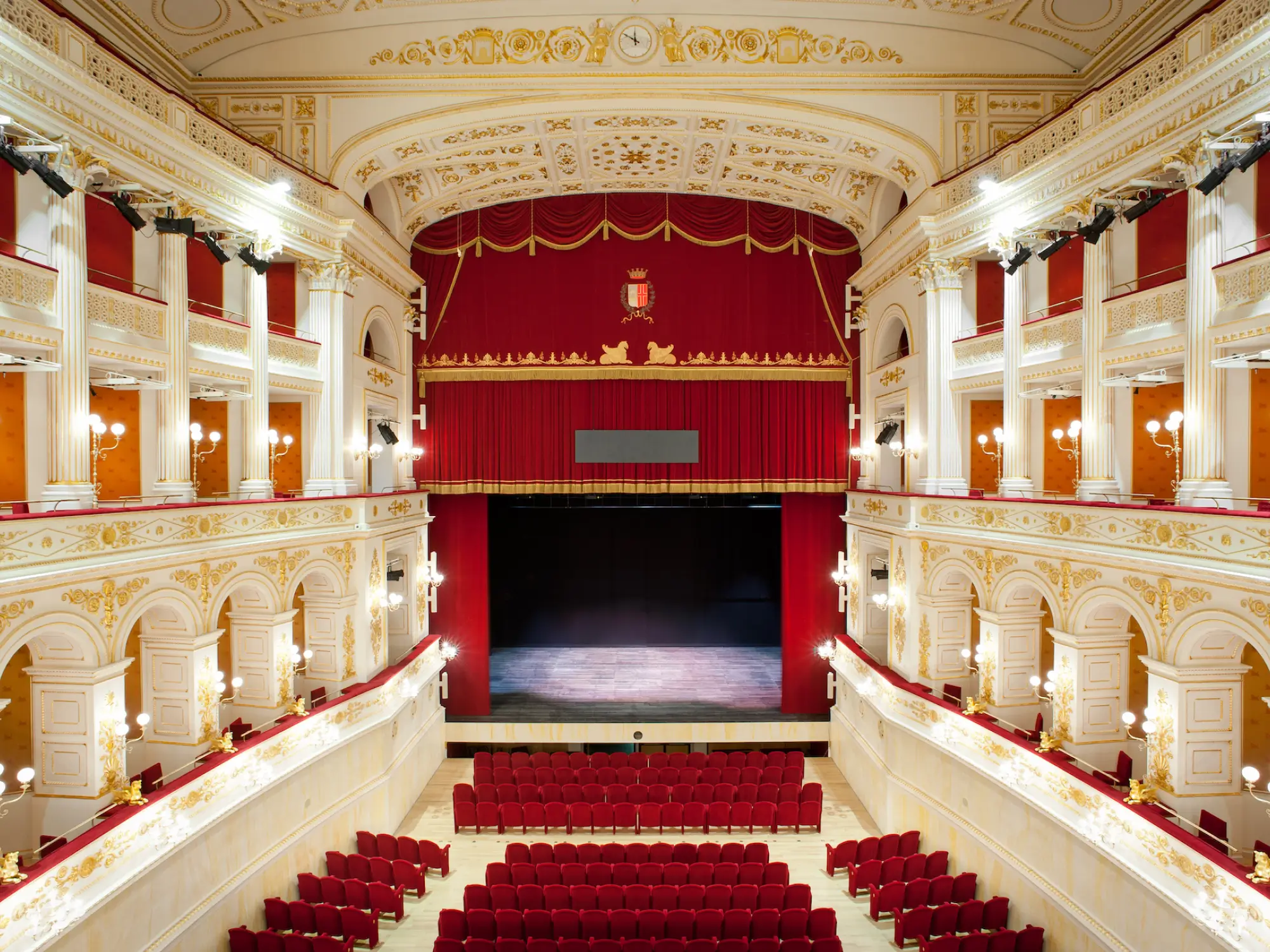
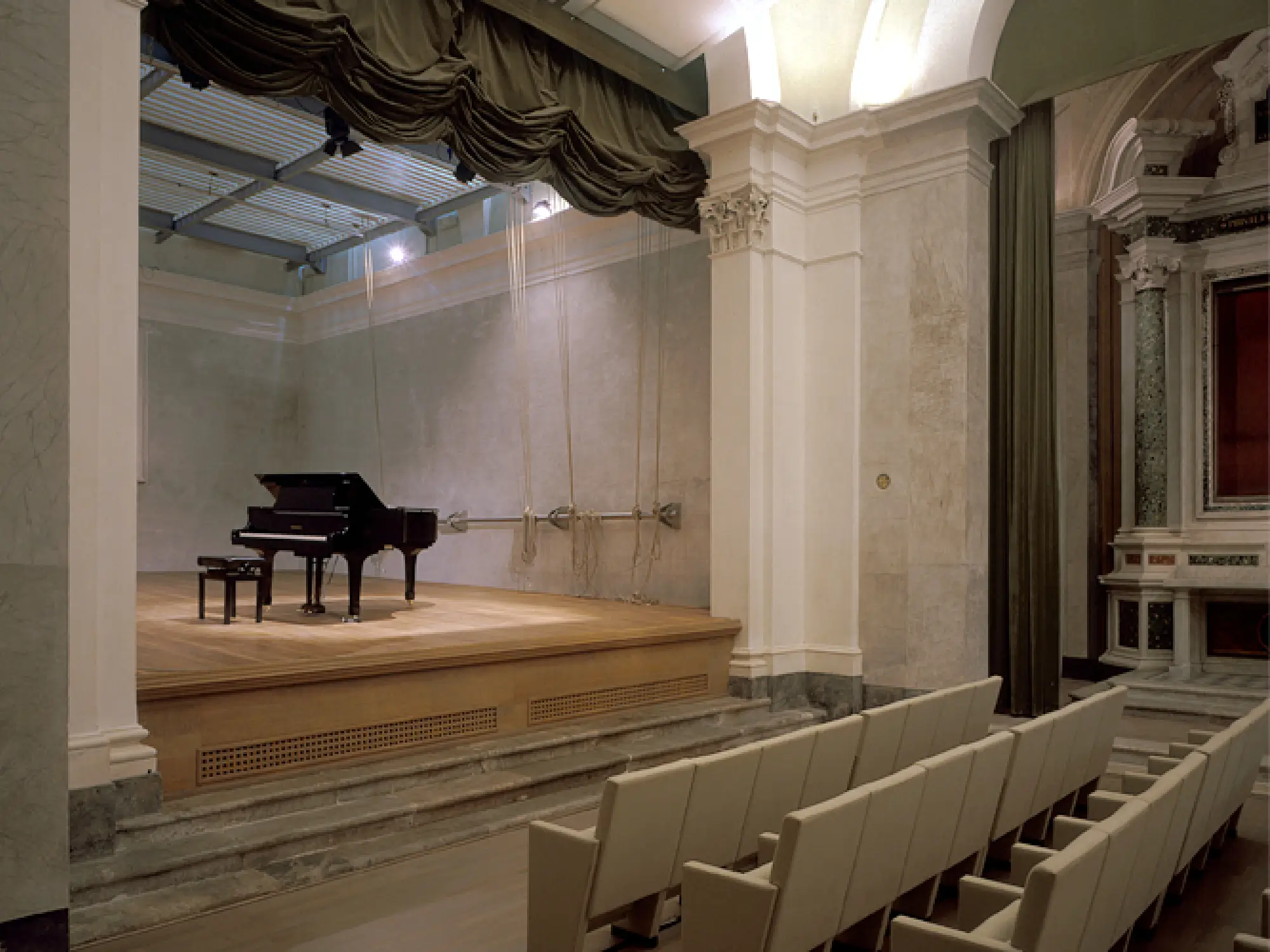
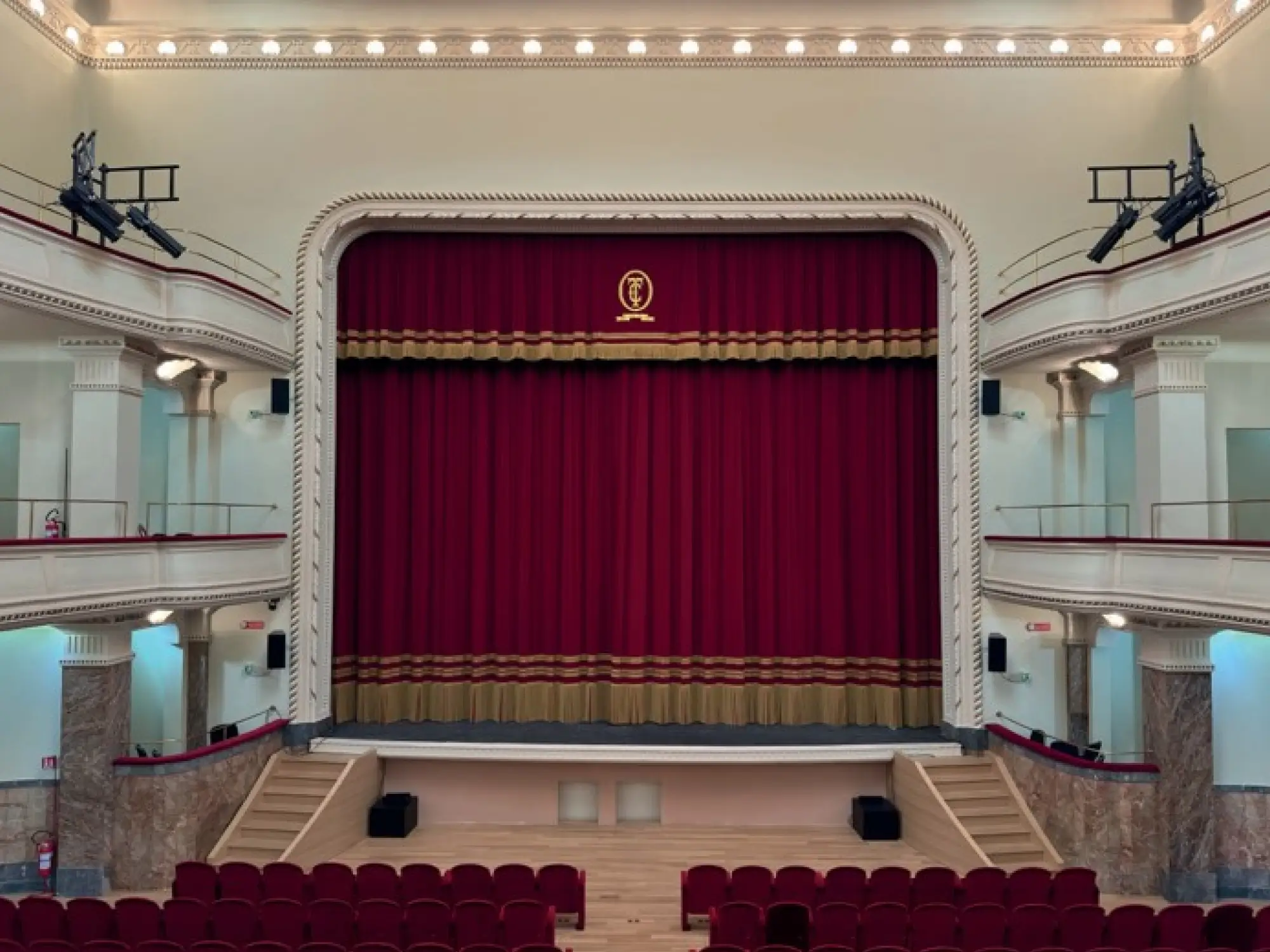
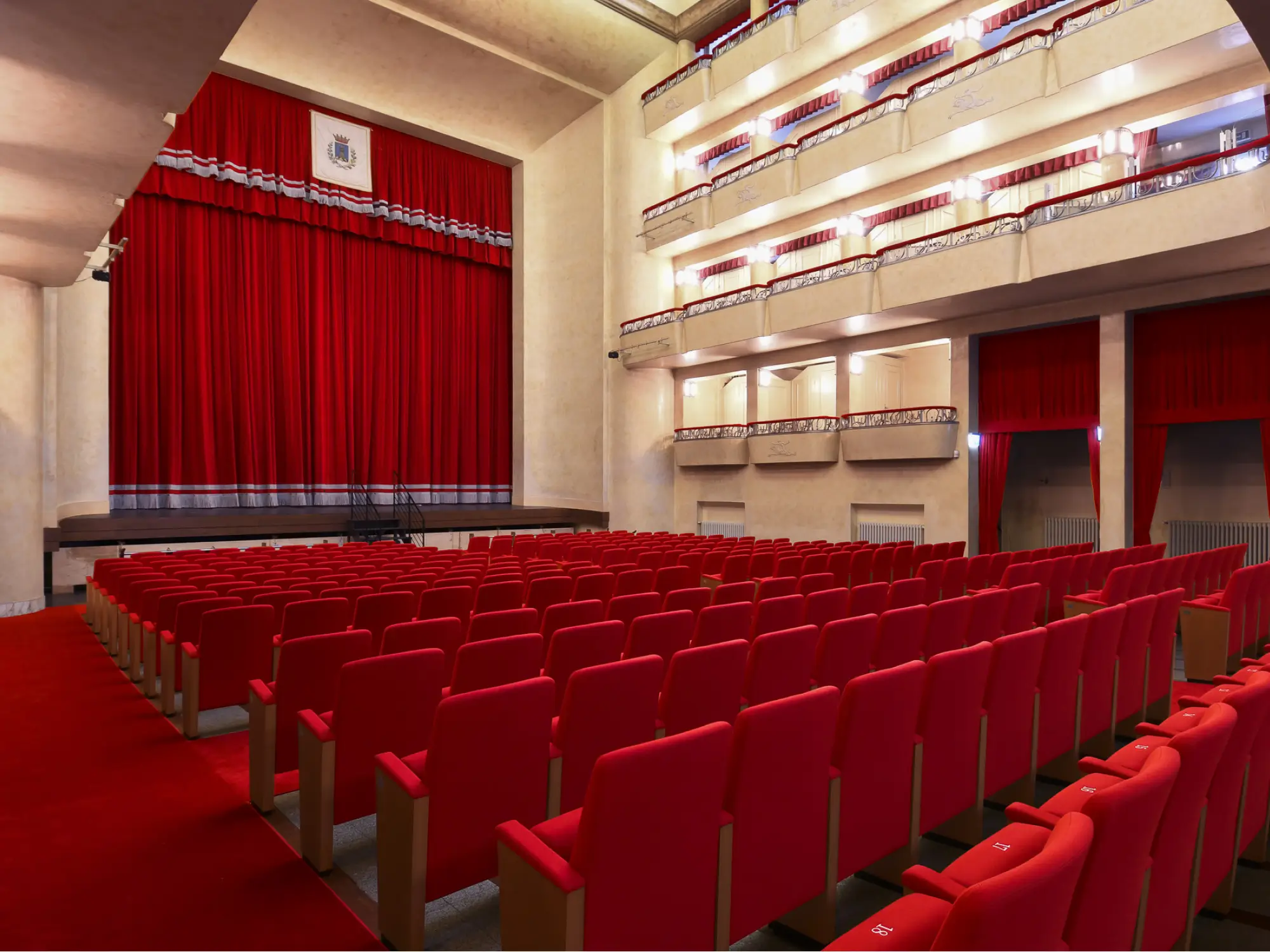
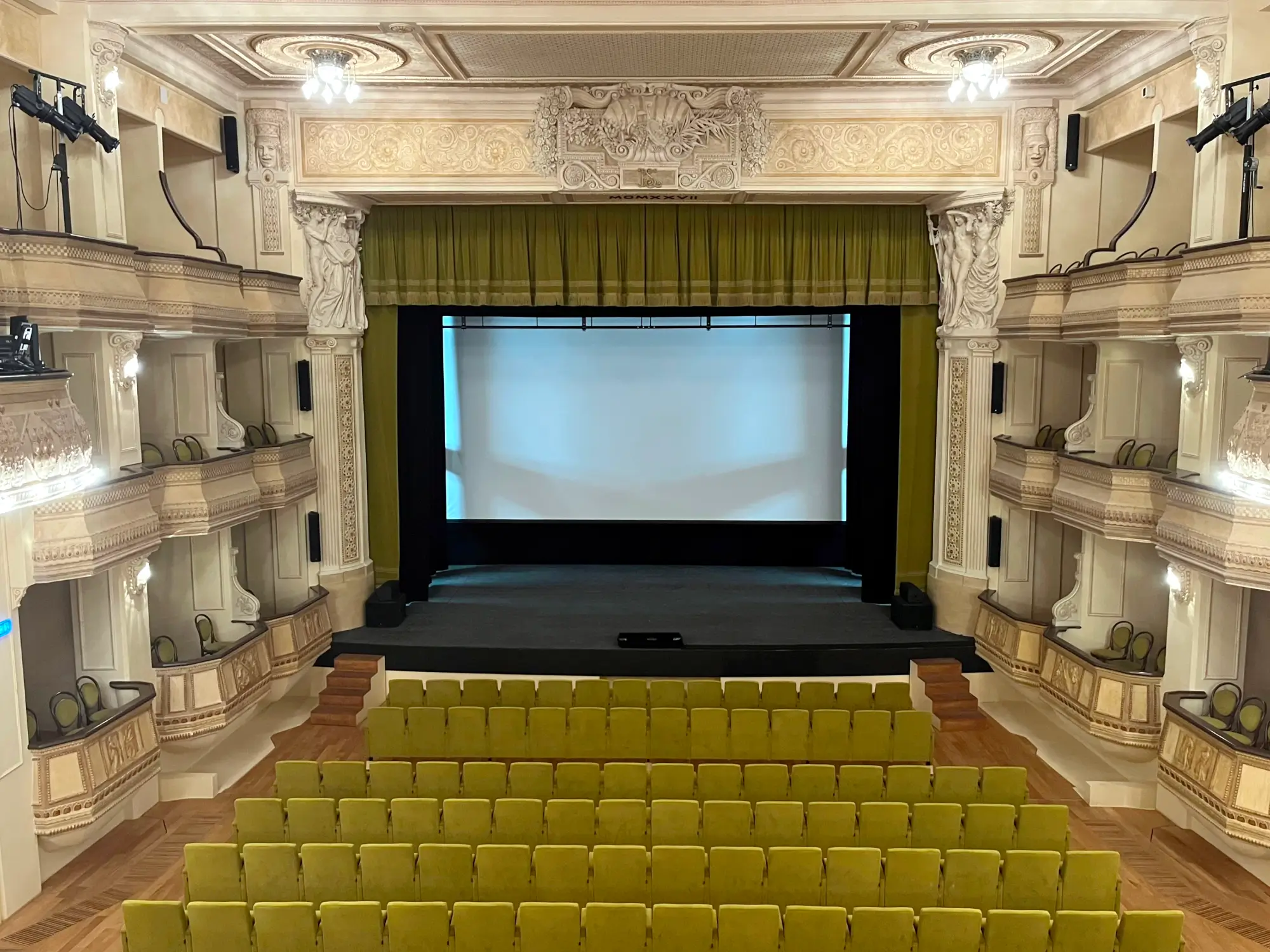
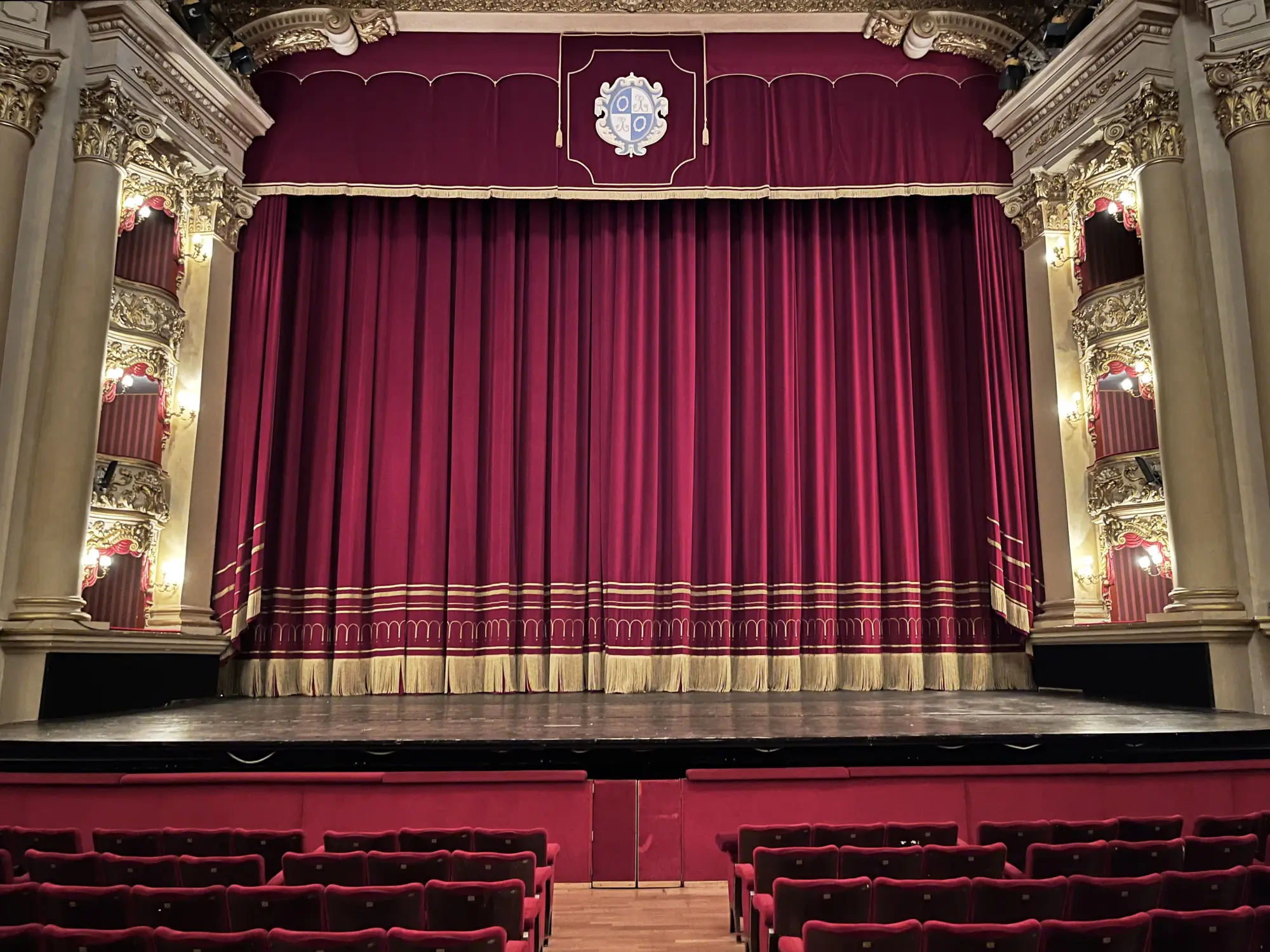
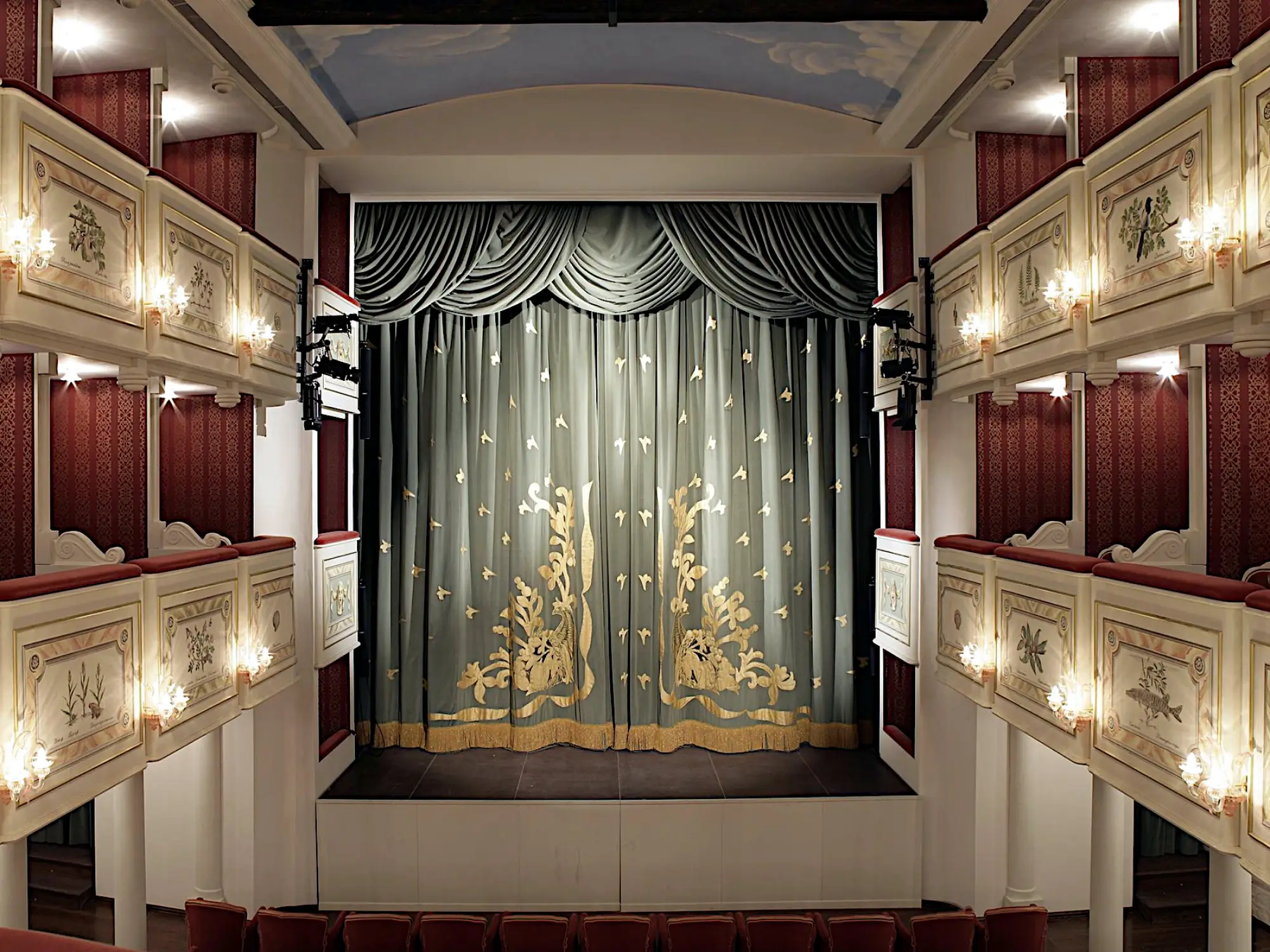
Our front curtains are designed and manufactured to meet the requirements of all types of theatre and stage productions.
Thanks to their high quality and versatility, they are ideal for creating the right atmosphere, from the magic of a dramatic opening to a touch of class for every performance.
Technical specifications
Each curtain is custom-made in our upholstery workshop, where expert seamstresses take care of every stage and detail with precision.
This allows us to respond flexibly to all manner of projects, delivering fully customised solutions.
Characteristics include:
High-quality fabrics, resistant to abrasion, lightfastness, GPP criteria, different weights and sound absorption values.
Safety through the use of fire-resistant fabrics.
Silent and smooth opening and closing mechanisms for precise and reliable operation.
Customisation in terms of size, colour and design, to fit perfectly into any setting.
Types of Opening
We offer a wide range of front curtains, with different opening systems that meet the technical and aesthetic requirements of different theatre configurations.
Each type involves the use of high-quality materials to ensure durability and stage impact.
Our front curtain opening systems include:
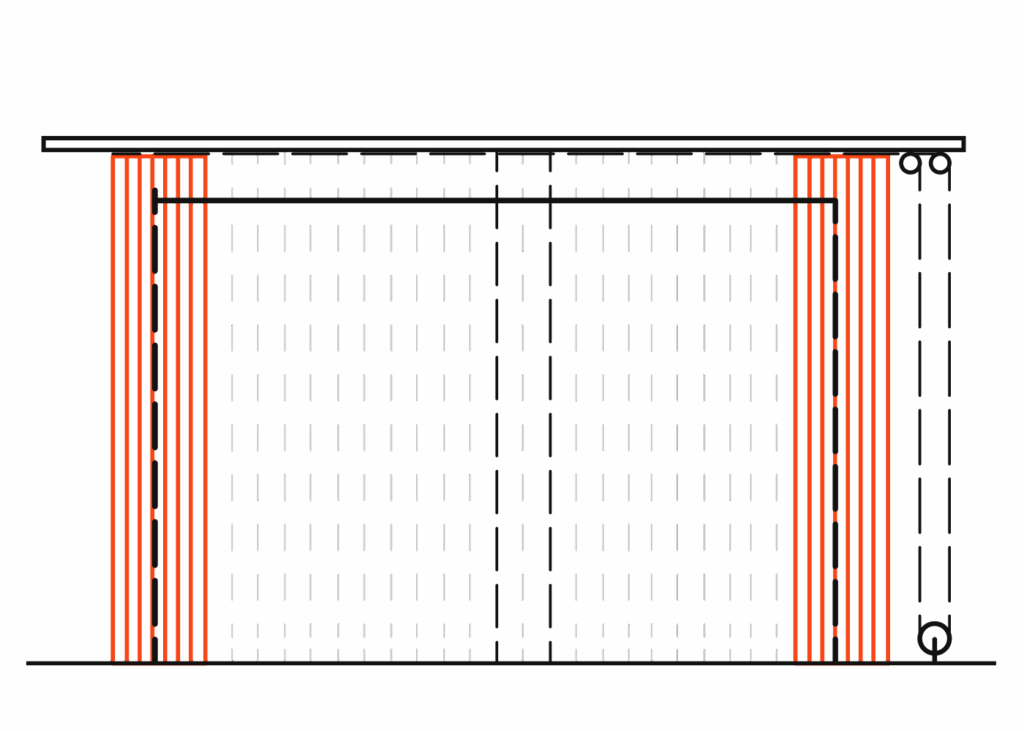
Greek opening: a horizontal opening in two parts with central overlap (either manual or motorised, or both), suitable for small and medium-sized stages.
This system can be used for linear or curved configurations.
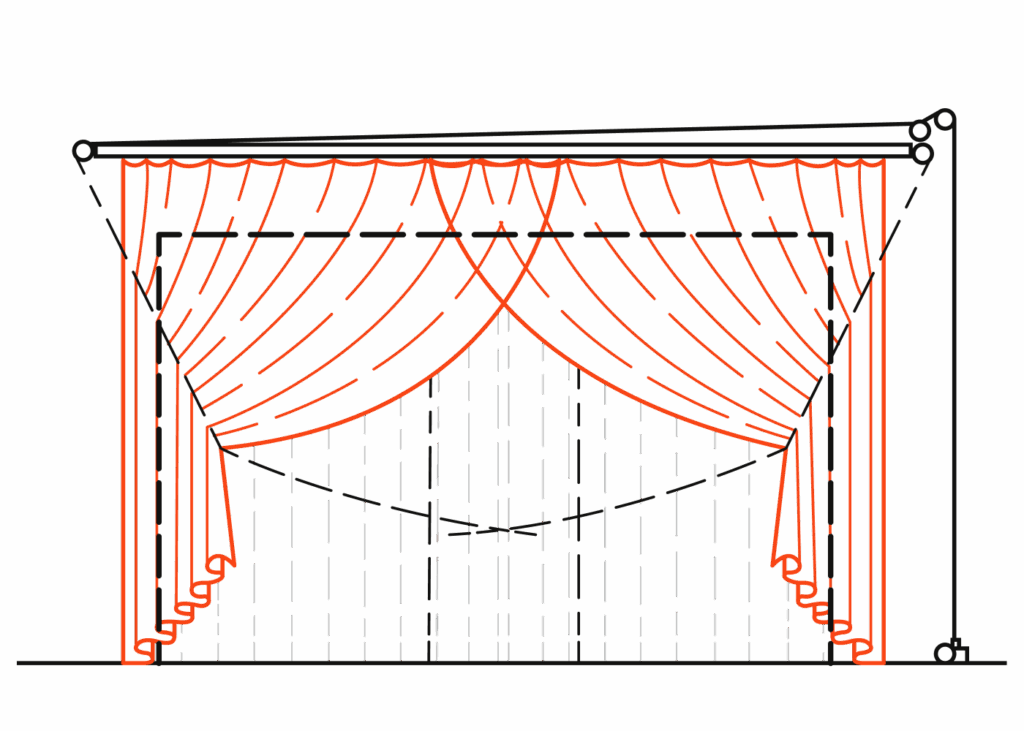
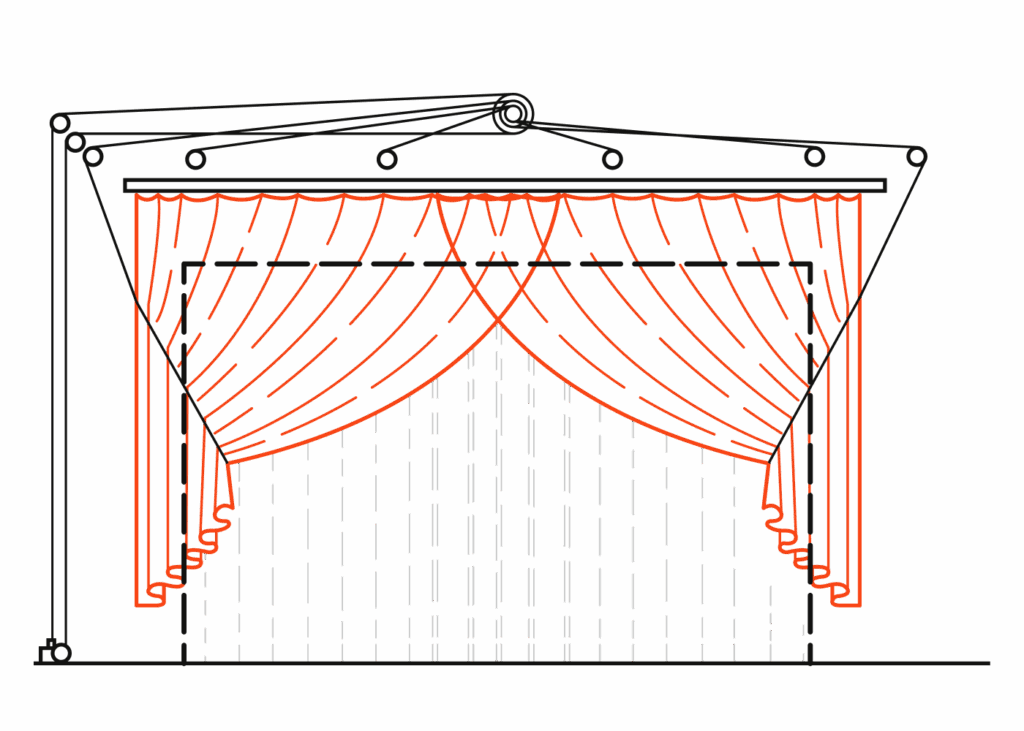
Italian/Imperial opening: a diagonal opening in two parts with a central overlap, widely used in large opera theatres with stage heights sufficient to allow for its movement.
It opens centrally by means of guide rings on the back through which a motorised fly line cable passes, allowing the fabric to be raised towards the two upper side corners of the stage opening.
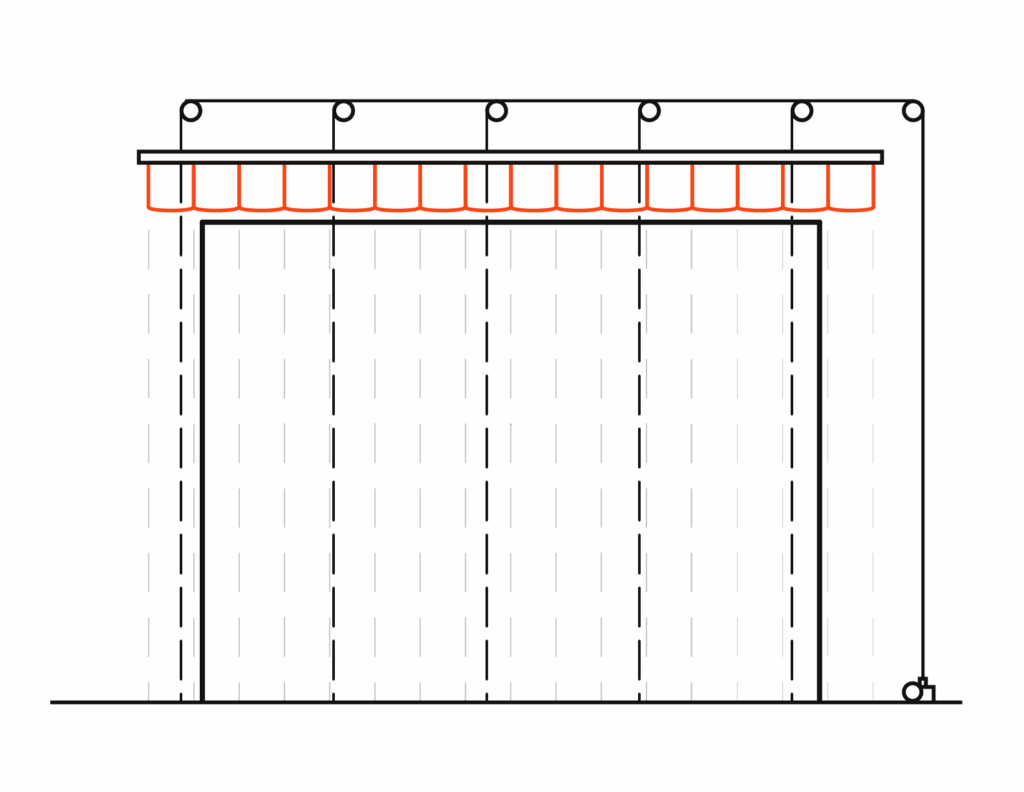
Roman opening: The curtain, made from a single large taut piece of fabric, is raised vertically by the simultaneous movement of a series of ropes attached to the lower edge, which remains horizontal throughout the manoeuvre.
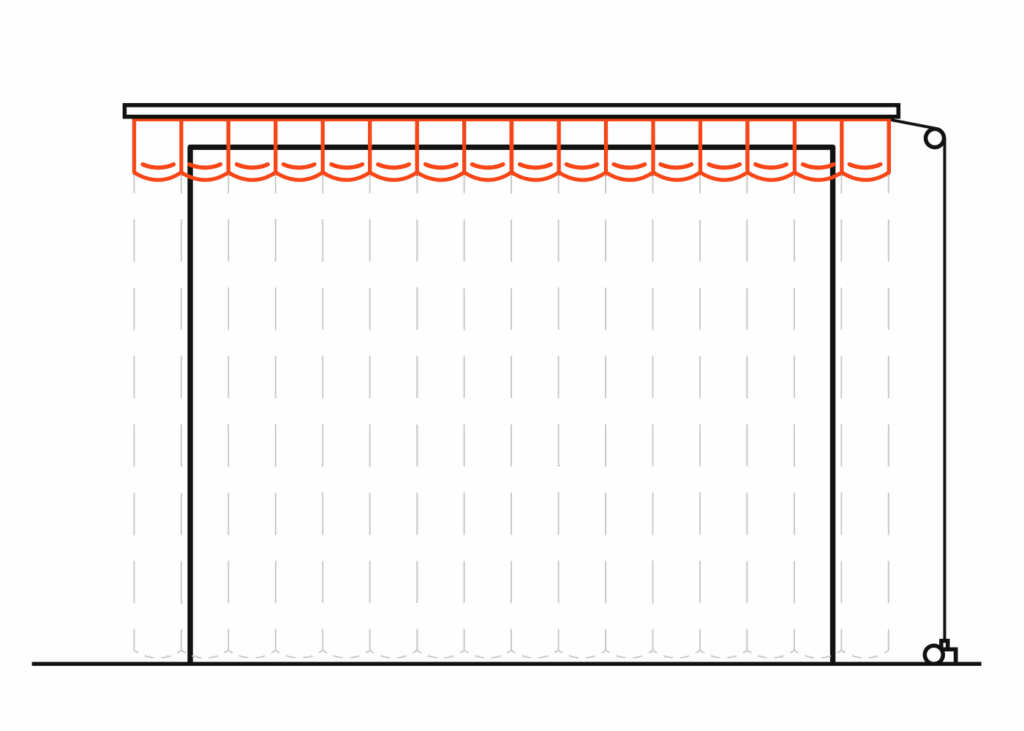
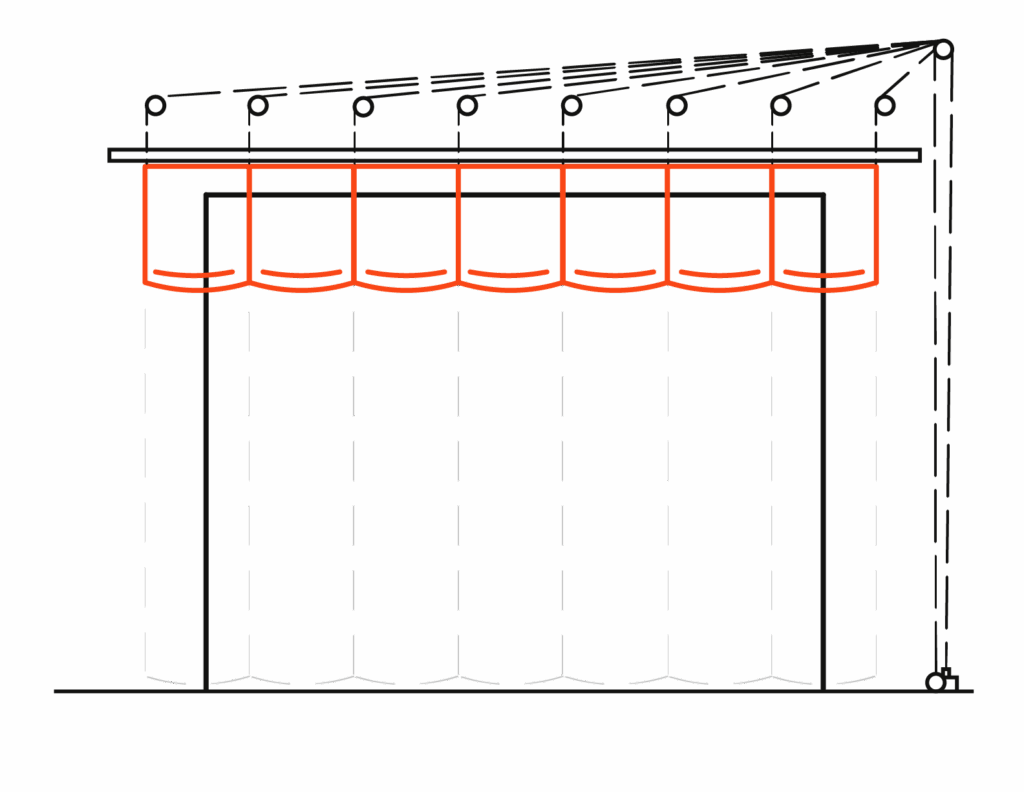
Venetian/Austrian opening: Elegant and refined, it features a single panel of fabric, rich in both horizontal and vertical lines, which is gathered upwards to create a uniform pleated effect, thanks to a series of ropes attached to the lower edge.
With the Austrian opening, the draping opens from the bottom upwards with different heights in the central part, by means of a series of ropes attached to the lower edge.
French opening: This system combines the lateral movement of the Italian-style curtain with the vertical lifting of the German-style curtain.
The two motorised movements are synchronised via a single control, regulated by the drum on the fly loft grid.
German opening: The curtain, suitable for fly towers where the height between the stage arch and the fly loft is equal to or greater than the height of the stage opening, rises vertically, disappearing completely and leaving the stage opening completely free (forward lifting).
The curtain is attached to a metal truss and raised by means of ropes that wind on a drum on the grid.
Each opening is designed to meet the specific needs of each stage space, offering versatile solutions for any type of production.
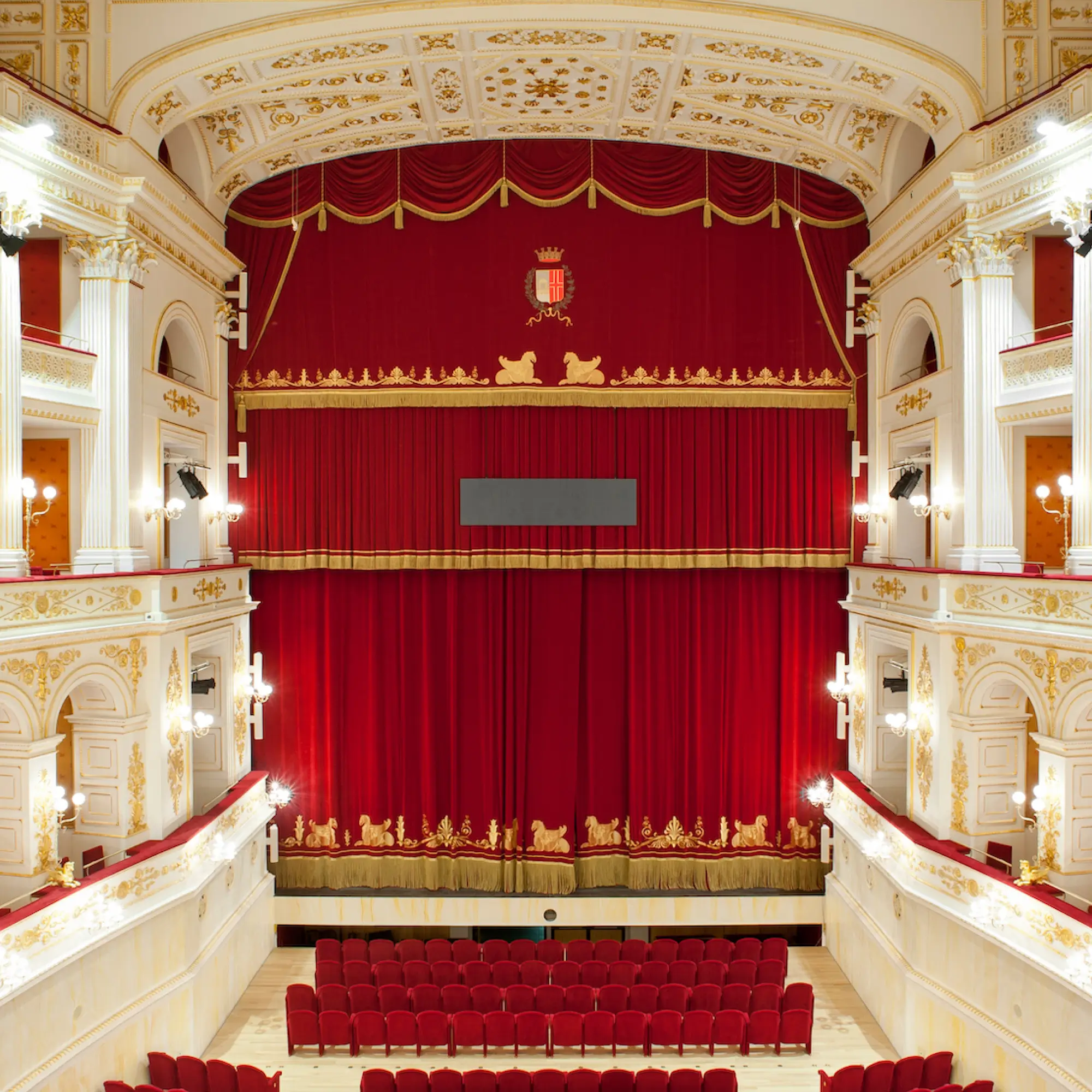
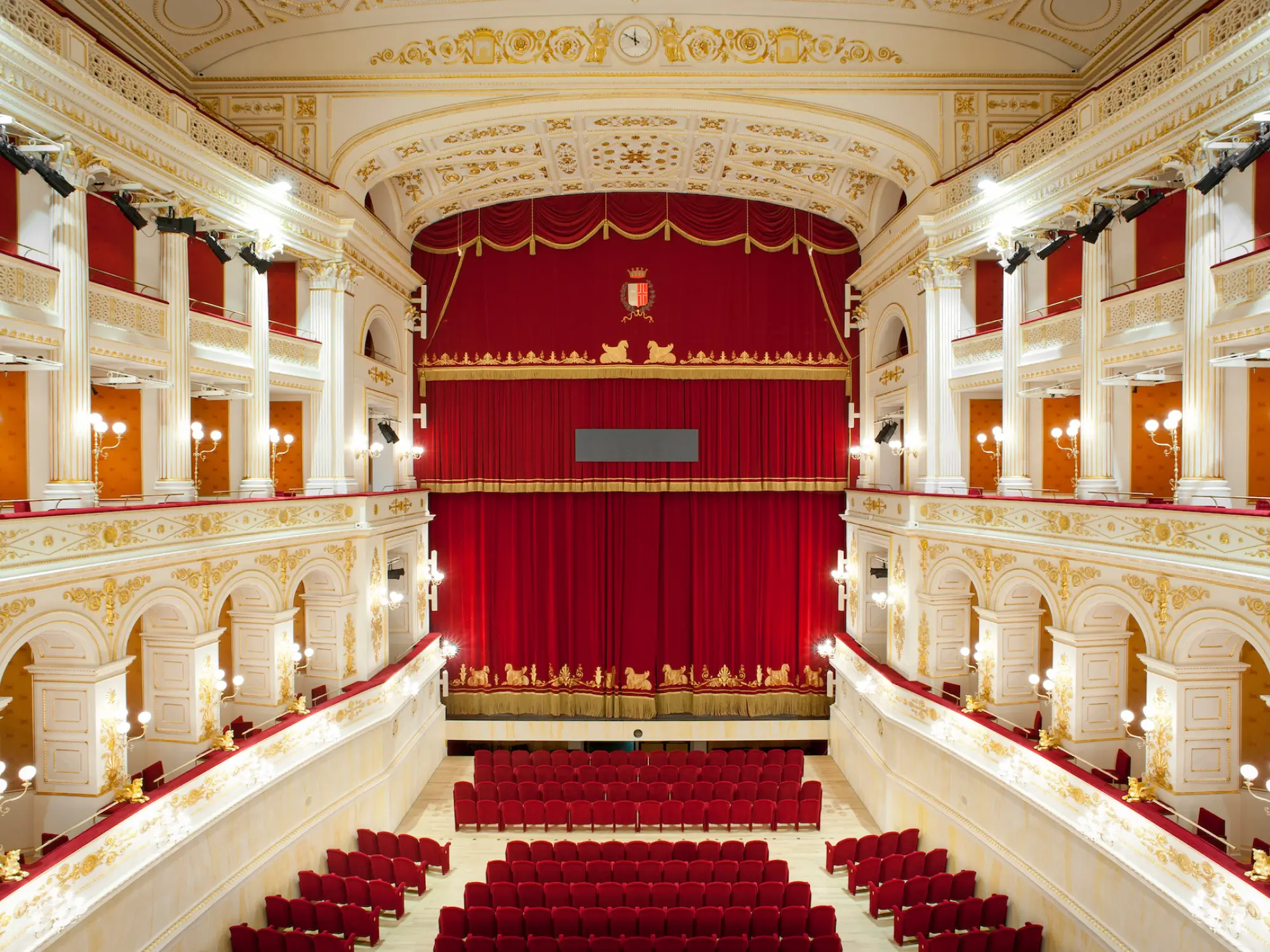
The stage opening drapes visually complete the stage, framing the scene and harmonising the ensemble. These elements are available in a variety of styles, fabrics and decorations to best meet the requirements of each theatre.
Each valance is made to measure with extreme attention to detail. In addition to drapes, side festoons and trimmings, we can customise our products with:
Decorations: Embroidery, trimmings, bows and borders in fine materials.
Coats of Arms and Logos: Possibility of adding city coats of arms or theatre logos, embroidered or applied to removable panels.
We can provide skilled restoration services for historic drapes.
Thanks to meticulous craftsmanship, we are able to restore and enhance original elements, accurately reproducing deteriorated parts to preserve the style and character of the piece.